

5 Hard Truths from the 2026 State of Customer Experience

We’ve officially entered the new era of customer experience. But what does that mean, exactly?
To go beyond the discourse and get the real pulse of the current experience landscape, we went straight to the source. We surveyed over 550 CX practitioners and 1,500 consumers, and analyzed benchmarks from over 600 of our anonymized enterprise customer experience programs — making this our most comprehensive research to date.
Our full 2026 State of Customer Experience Report reveals the extensive, genuine, and gritty details of where customer experience is excelling and falling short. We recommend you pour yourself a cup of tea and read this cover to cover — we’re here to arm you with critical statistics and insights (and even help you win a CX category in Jeopardy, if that ever becomes a thing).
But of course you’re eager for the TL;DR now, so here are the biggest takeaways:
2026 Customer Experience Trends: 5 Surprising Findings from Our State of CX Report
1. A massive perception gap still exists between brands and consumers.
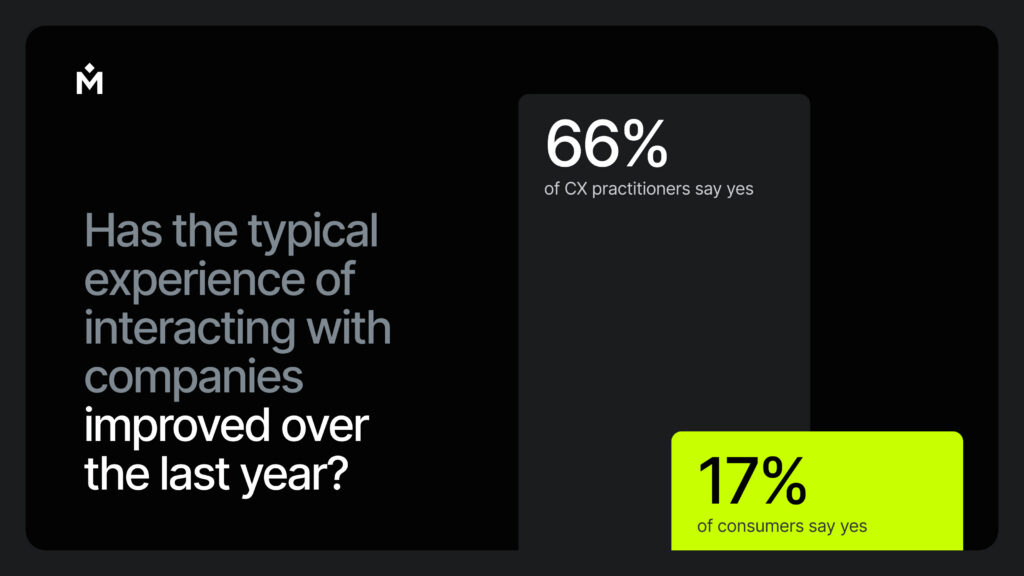
Brands think they’re doing it right… but consumers are not convinced. The gap between what practitioners think about their experience quality and how consumers feel is so wide that CX teams are almost 4x more likely to say their experience has improved over the past year compared to consumers.
More likely than not, your customers are telling you how they really feel, across social chatter, frustrated phone calls and live chat sessions, and through their app and website abandonment activity. You just don’t have the tools in place to capture the full story.
It’s time to step up how you measure experience, so you and your customers can get on the same page about what’s working (and what’s not).
2. Under current org structures, insights don’t turn to action.
Despite what their titles may indicate, most experience professionals don’t actually have oversight over the full customer experience. In reality, they may only be responsible for a specific dataset, stage of the customer lifecycle, customer segment, channel, product or business unit, or region.
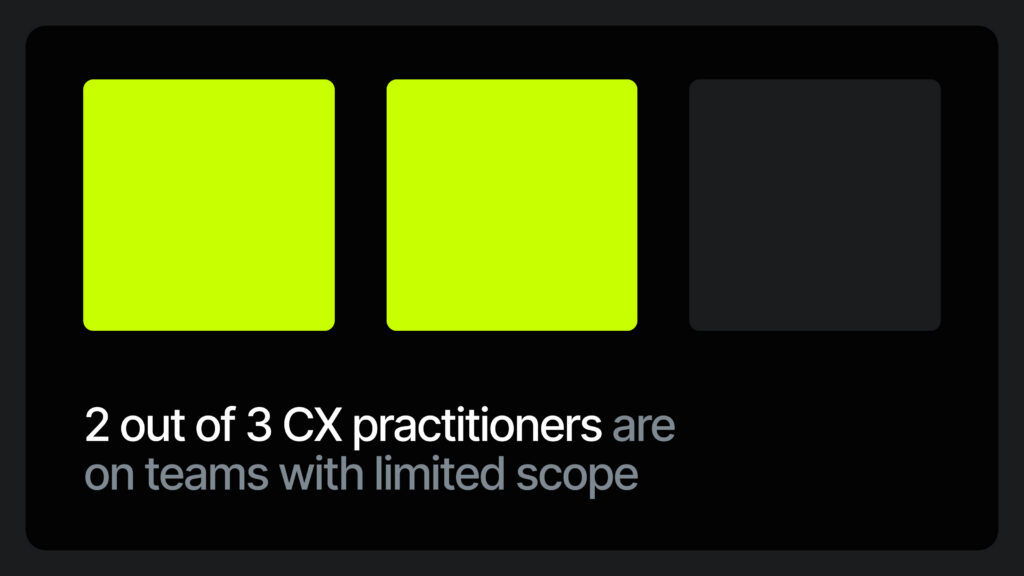
Our research found that only 1 in 3 CX teams have insight into the full customer experience of their entire organizations.
As a result, insights sit without any action being taken on them, progress stalls, and it’s harder and harder for CX teams to influence meaningful outcomes.
3. Companies are prioritizing AI enablement across the frontline — but should stay vigilant about introducing errors.
While most practitioners (83%) say giving their employees the AI tools they need is critical to reaching their 2026 goals, even more (85%) say the right tools can help team members better serve their customers. And a similar share (81%) have defined which parts of the customer journey should be handled by AI, humans, or both.
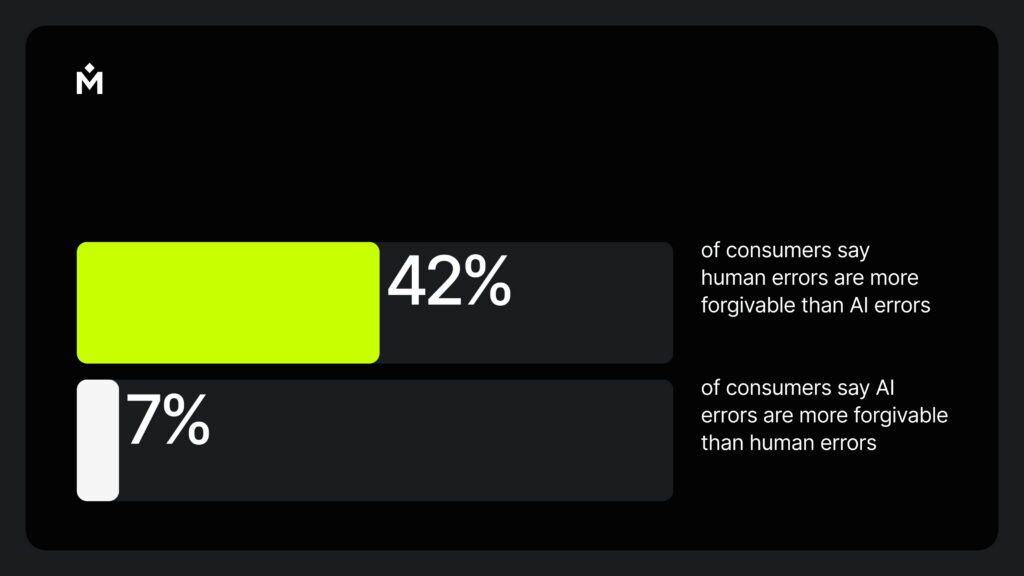
But, at the same time, companies that lean into AI at the expense of the customer experience need to be prepared to pay an AI tax if issues arise. Consumers have little tolerance for AI-generated errors, whereas nearly half (42%) say human errors are more forgivable.
4. Traditional surveys are losing effectiveness.
Fewer consumers are opening surveys they receive from the brands they do business with and even fewer are taking the time to fill them out. Most (60%) question whether it’s worth taking the time to let companies know about negative experiences when they occur.
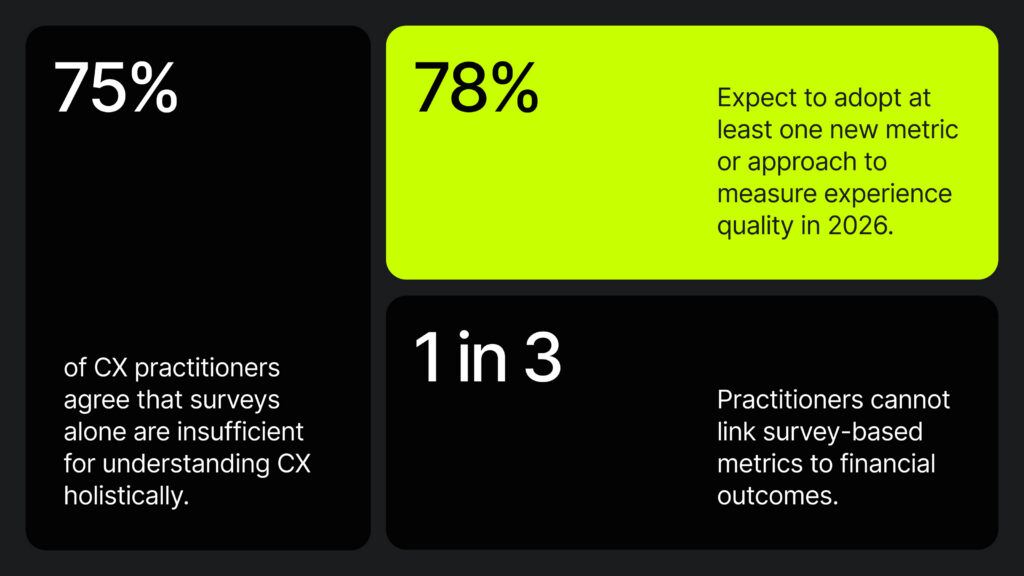
Unsurprisingly, CX teams are taking note, recognizing that surveys alone aren’t cutting it, and starting to do something about it.
5. “Signal depth” is the key to proving ROI.
The less you track, the less you know — and the less likely you may be to grow.
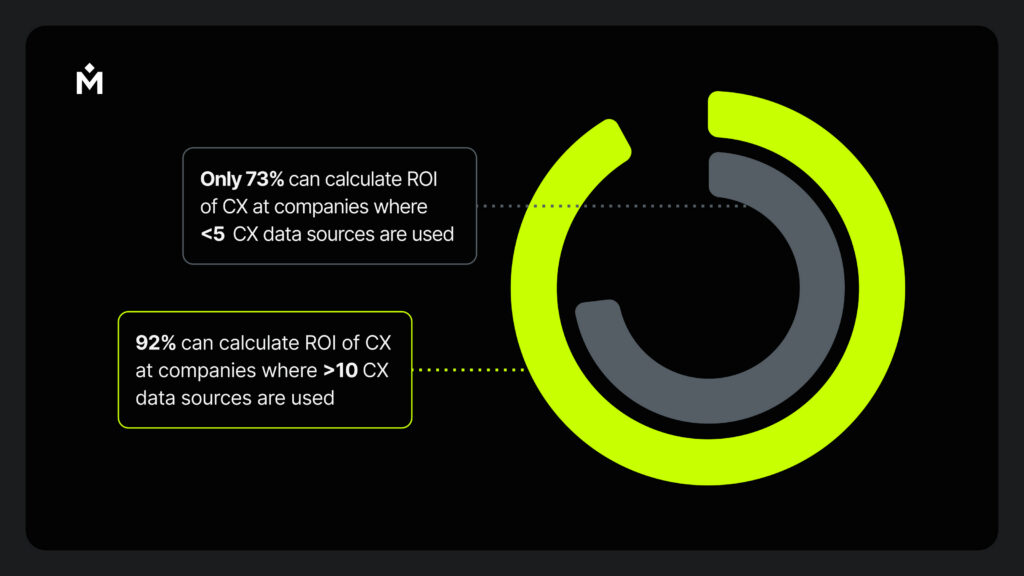
Among teams that report on CX using five or fewer data sources, only 73% say they can measure the ROI of their CX efforts. That confidence level jumps by an impressive 26% to a total of 92% among teams using 10 or more sources.
Companies on the fast track to growth are 2x as likely as those with flat or declining revenues to leverage more CX signals.
What the Most Successful CX Teams Are Planning in 2026
Brands who are more likely to stay competitive in 2026 are expanding beyond surveys and capturing more insights, focusing less on scores and more on financial outcomes, and leaning into AI without losing the human touch.
Most importantly, they’re not leaving critical insights at the planning stage. They’re doing. They’re fueling action across the organization in ways brands that are still stuck in solos simply cannot.
For more insights on what’s driving wins this year, check out the complete 2026 State of Customer Experience Report.
Author