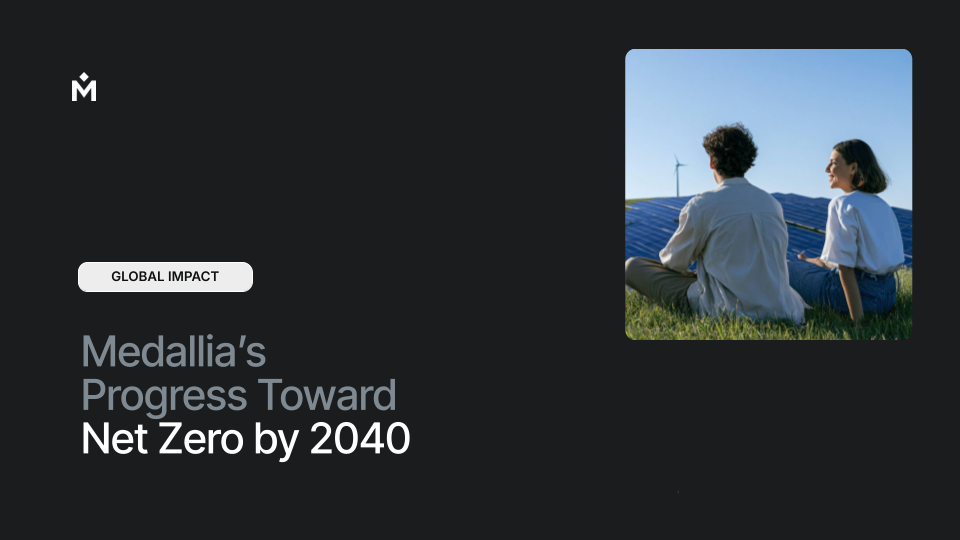
In 2024, Medallia committed to reaching net zero greenhouse gas emissions by 2040.
That kind of commitment is intentionally long-term, which makes the milestones along the way especially important. The real measure is whether there are clear targets, real accountability, and steady progress behind the goal.
Medallia has now reached one of those key milestones: our near-term reduction targets have been validated by the Science Based Targets initiative, or SBTi.
In simple terms, that gives us independently validated targets for the emissions reductions we are working toward over the next 5–10 years.
A lot of work has gone into getting us here.
Heather Jin, our Global Head of Social Impact and Sustainability, has been leading Medallia’s sustainability work for years. She has helped to shape this program, build a clearer understanding of our environmental footprint, and move the company from a long-term commitment toward more measurable goals.
For Medallians, I think this is worth recognizing. Much of this work happens quietly and behind the scenes, but it matters. It reflects our responsibility to follow through on the commitments we make and to be transparent about the progress we are making.
It also matters to our customers and partners. Companies are paying closer attention to the environmental impact of the organizations they do business with, just as we are doing with our own suppliers and partners.
Heather knows this work better than anyone, so I asked her to explain what this milestone means, what Medallia has committed to, and where the focus goes from here.
Q: What has Medallia committed to?
Heather: Greenhouse gas emissions are commonly grouped into Scope 1, 2, and 3. For software-as-a-service companies, that means emissions from company-owned physical assets (Scope 1), purchased electricity at facilities (Scope 2), and all other sources such as suppliers, business travel, and employee commuting (Scope 3).
Using Fiscal Year 2024 as our baseline, Medallia has committed to:
- Reducing absolute Scope 1 and Scope 2 greenhouse gas emissions by 78.79% by Fiscal Year 2034
- Reducing Scope 3 emissions by 61.1% per USD value added over the same period
Those targets give us specific reductions to work toward over the next several years as we continue towards our net zero by 2040 goal.
Q: Why does SBTi validation matter?
Heather: SBTi is the gold standard for assessing whether corporate targets are aligned with the latest climate science and the 2025 UN Paris Agreement’s goal to limit global warming to 1.5°C. For Medallia, that validation adds rigor and accountability — offering our employees, customers, and partners confidence in our sustainability strategy.
For our customers, this is especially important since Scope 3 emissions are largely driven by suppliers. That means Medallia’s emissions are a part of our customers’ Scope 3 emissions — so by reducing our own emissions, we are helping our customers reduce theirs.
And for our employees, we hope that seeing our values driving real-world action fosters pride for Medallia.
Q: Where are we focusing?
Heather: We are concentrating on the areas where we can have the greatest influence.
- Sustainable facilities: We continue to evaluate the environmental performance of our data centers, cloud infrastructure, and offices, including their approach to energy efficiency. That is why 71% of our data center emissions come from renewable energy sources, and our headquarters in Tysons, VA, meets LEED Gold standards.
- Renewable energy: Medallia has invested in a virtual power purchase agreement supporting the repowering of a Texas wind farm. The project is expected to avoid more than 6,000 tonnes of CO2e over five years and was designed to address a significant portion of Medallia’s North American electricity footprint at the time of the investment.
- Suppliers and partners: As emissions from our suppliers make up the majority of our footprint, we have incorporated sustainability considerations during relevant vendor selection processes and work with priority suppliers to help them measure their own emissions.
- Data and reporting: We know that environmental strategy is only as good as the data we input. That is why we’ve audited our fiscal year 2025 Scope 1 and Scope 2, and have reported to the Carbon Disclosure Project since 2023. We will continue to strengthen how we measure and report our progress over time.
Q: What comes next?
Heather: The focus now is delivering against the targets we have set.
That means continuing to work with our suppliers and facilities, improving the quality of our environmental data, and reporting our progress transparently.
We will continue to share that progress through Medallia’s annual Global Impact Report and other disclosures.
Reaching net zero emissions by 2040 remains our broader vision. Having these near-term targets validated by SBTi gives us a disciplined roadmap for the critical years ahead.
To explore our full climate strategy, read our complete 2025–2026 Global Impact Report.